A milestone. A celebration. I think I did it right, but with bureaucracies, I have doubts. But. I have mailed a paperback copy of Fire Race to the U.S. Library of Congress. I hope I did it right. I’ve submitted several books during the previous 22 years, so I should be practiced, but a lot can change in that much time.
I didn’t need to do it. Nothing has apparently happened that benefited from registering my copyright to my works. But copyright for a book is like having a fire extinguisher in the kitchen; it may never be used, but it is a good idea to have it there.
Fire extinguishers put out fires or at least help people fight a fire. Copyright protects an author’s work, but its primary value, besides an ego boost, is to provide the author or their lawyer proof that the author performed their due diligence in establishing that it is the author’s work if someone seems to be violating that or challenging the ownership. Whew. See what happens when legalities get included? The sentences stretch out over lines with seemingly obvious and repetitive clauses.
I am not a lawyer. If you have any copyright questions, go hire a copyright attorney. It seems like you should be able to simply call the government, but they have to be so impartial as to hollow out any of their advice. They don’t know you. Maybe you’re the bad one.
I am a writer and an author. I make the distinction between writer and author that an author is a writer who has published what they’ve written. The dictionary may not agree. I won’t even check.
This post is…well, this post is part of my celebration, so publishing it to my blog is one step in my years-long ritual of writing a book. This post is simply a chronicle and commentary that might be useful to a writer who has never been through the process. It can seem that there’s no need for a process. Depending on what gets counted, I counted about 28 steps. That may seem simple to some. You get to decide for you.
More than half of the steps are simply answering questions that Amazon or probably most publishers will ask. I published mine through Amazon/Kindle. Scroll back through or jump via a search to my previous posts for the object of this topic: Fire Race, my second science fiction novel.
Publishing a book is a business move. Official people and organizations want specific answers to your exact name, your exact address and contact information, is anyone else involved who deserves credit or payment, etc. Creativity is not allowed.
I think I can save someone at least one set of steps. Here’s the link to the sub-page on the Library of Congress website. (https://copyright.gov/registration/) It is a few clicks down, and gets past the Library’s other services, like searching for copyrighted works.
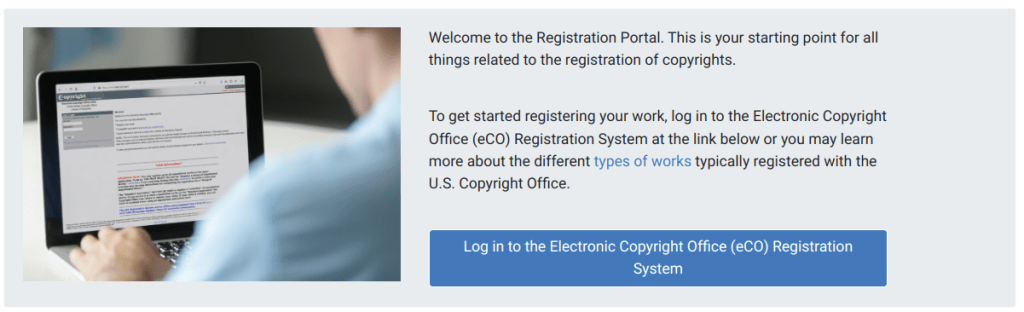
The Library, like too many other organizations, wants you to set up an account, even if you’re only going to use it every few years. Here’s the most twisted part. Their password requirements are the most arcane I’ve ever encountered, to the point that I consider them counter-productive. How many people can remember a 16-digit password? And then, it has to be changed and updated.
Here’s a truncated (truncated!) list of their requirements:
- 16 (sixteen!) characters – at least. At least? What’s the maximum?
- It must contain at least (there’s that ‘at least’ again) three each of:
- UPPERCASE
- lowercase
- numbers
- special characters
- That makes twelve so far, but don’t repeat any of the characters three times. SO much for AAAaaa111///xxx-.
- Don’t change it more than once a day. (Once a day? I use this system every few years, years!)
- And change the pass every 60 days, or when it says to. (So that after creating that password, change it six times a year, at least; which is why I let it lapse.)
- Oh yeah, and don’t try to use any of the previous eleven ones you’ve used. People who have to access this system must come up with a system that includes easy changes, like using a counter. (example: AAAaaa111///xxx- then AAAaaa112///xxx-. Oops. No repeated characters. ABCabc123/><xxx- then ABCabc124/><xxx- .)
They asked if I wanted to take part in a survey. Guess what I mentioned.
Despite my rant, the entire process took less than 30 minutes. Well, it took less than 60 minutes. I had to start over because, despite repeatedly giving it my new address (MyTinyExperiment.com), the final form used the old address. I did it again, which led to having two books to submit in the final form. I guessed at which one to delete. Wish me luck.
The process cost $65. Not bad, actually good, considering the honor and the protection.
The site looks like something I would’ve generated twenty years ago. Federal sites are like that. Don’t be surprised. If it works, it works.
The Library needs a copy, so they provide two delivery options: physical and digital. I chose physical, which meant they provided a shipping manifest to include with a copy of the book. That’s slower, but I like sending a pile of paper from one coast to the other coast. (The Post Office had a medium bubblewrap envelope that was just right.) The digital way is simpler, cheaper, and faster. Call me a traditionalist. Call me old, relatively. (Really, ask my relatives.)

There’s always more to mention. Have your ISBN handy. I brought up the book’s Amazon page because a lot of the pertinent information is there. Let’s see. What else? Things change. During the most recent decades, the Library has had to deal with the anthrax attack, which impacted the mail room, which meant really long delays and a reason to use UPS back then; the rise of digital; the proliferation of print-on-demand titles, which blossomed the number of published works ten-fold, from my estimates; and undoubtedly more than I can know. I’m glad they do what they do.
So. I’ll pretty up this post, ‘publish it’ to my blog, and celebrate with half of last night’s pizza (meat-eaters, gluten-free) and a beer at least.
 tomthewriter.com
Leave a comment